



India International Water Week - Climate Resilient Water Management Event Description Although nearly 70% of the Earth&...

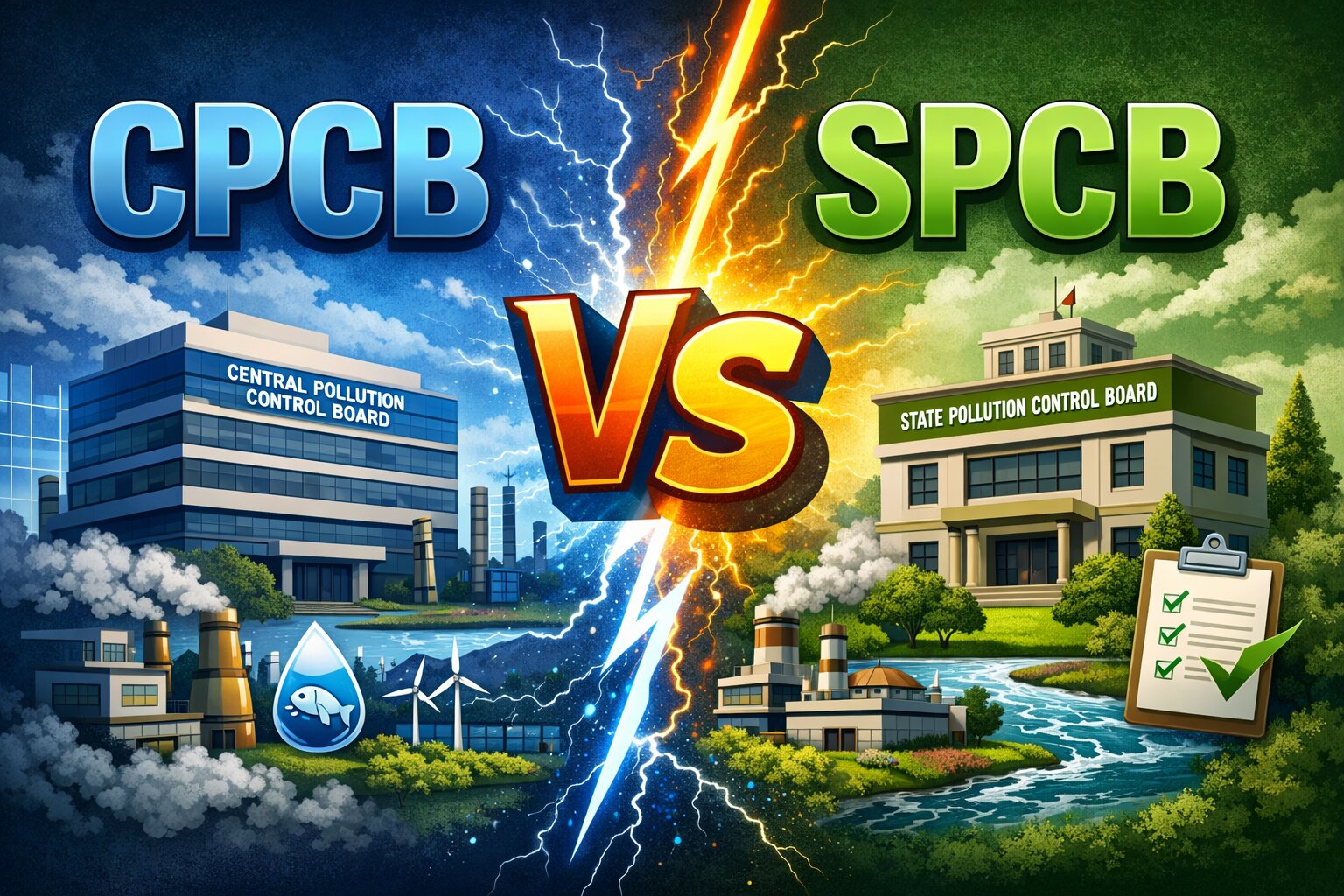
CPCB v/s SPCB: Understanding Environmental Authorities in India
CPCB v/s SPCB: Understanding Environmental Authorities in India
17-06-2026
Every business, small, medium, or big, in India must have environmental compliance. Whether you are setting up a manufacturing unit, applying for environmental clearances, obtaining Consent to Operate, or managing waste disposal, understanding the role of environmental regulators is important. Two main environmental authorities in India- the Central Pollution Control Board (CPCB) and the State Pollution Control Board (SPCB) are responsible for governing environmental compliance in India.
Both organizations work towards controlling and preventing pollution and protecting the environment; their responsibilities, enforcement powers and jurisdiction differ. It is important to understand CPCB v/s SPCB differences and their functions to ensure compliance with environmental norms.
What is CPCB?
It is a statutory organization established under the Water (Prevention and Control of Pollution) Act, 1974. The unit functions under the supervision of the Ministries of Environmental, Forest and Climate Change.
The main goal of CPCB is to promote environmental protection and control pollution across India through policy development, tech guidance, monitoring and coordination with the state authorities.
Functions of CPCB
• Formulating national pollution control standards
• Coordinating activities of SPCB
• Advising the central government on environmental matters
• Monitoring air, water and noise pollution levels across the country
• Developing environmental norms and compliance frameworks
• Conducting research and environmental assessments
• Issue directions and recommendations on pollution control measures
• Maintain nationwide environmental monitoring programs
• Supporting the implementation of environmental laws and norms
• Publishing reports and data related to pollution management.
Role of CPCB in India
• Establish national standards for air, water and noise pollution controls
• Advising the government on environmental protection policies
• Coordinating activities of SPCB
• Monitoring environmental quality across the country
• Conducts research, data analysis and pollution assessment programs
• Promotes effective implementation of environmental laws and norms.
Also Read:Conquer Delhi’s Pollution Test: A Step-by-Step Guide
What is SPCB?
It is a state-level statutory authority established under the Water (Prevention and Control of Pollution) Act, 1974. Each state and union territory has its own pollution control authority responsible for implementing environmental regulations within its jurisdiction.
It functions as the frontline environmental enforcement agencies that interact with industries, manufacturers, healthcare facilities and others.
Functions of SPCB
• Granting Consent to Establish and Consent to Operate
• Monitoring industrial pollution within the state
• Conducting inspections of industrial facilities
• Issuing environmental compliance notices and directions
• Enforcing pollution control laws and regulations
• Monitoring harmful waste management activities
• Verifying environmental compliance reports
• Assessing emissions and effluent discharge levels
• Recommending fines for environmental violations
• Coordinating with CPCB on pollution control initiatives.
Role of SPCB in India
• Issuing CTE and CTO for industries
• Monitoring industrial emissions, effluents and waste management practices
• Conducting environmental inspections and compliance audits
• Enforcing state-level pollution control norms
• Investigating environmental violations and complaints.
• Taking corrective action against non-compliant businesses and facilities.
Difference between CPCB and SPCB
The authorities of both bodies work towards environmental protection; their scope and responsibilities differ.
• Jurisdiction: CPCB operates at the national level. It oversees environmental policy implementation across India. It coordinates pollution control activities among the states. SPCB operates within a specific state or union territory. It implements environmental regulations locally. It also directly regulates industries and projects within its jurisdiction. The key CPCB and SPCB difference is that the former has nationwide authority and the latter functions at the state level.
• Policy Formulation: CPCB develops pollution control standards and national guidelines. It provides technical recommendations to governments. It also establishes frameworks for environmental monitoring. SPCB implements the guidelines and environmental laws of CPCB. It also ensures the industries adhere to the prescribed norms. It conducts inspections and field-level enforcement.
• Consent: CPCB does not issue routine operational consents to industries. It provides policy support and regulatory guidance. SPCB grants CTE and CTO. It also processes environmental compliance applications and reviews industry-specific pollution control measures.
• Monitoring: CPCB conducts national environmental monitoring programs. It maintains pollution databases and analytical reports. It also evaluates state-level environmental performance. SPCB conducts site inspections. It monitors emissions, effluent discharge and waste disposal. It issues closure notices and compliance directives when required.
• Relationship: CPCB acts as the apex environmental authority. It coordinates and guides state boards. It also ensures consistency in environmental regulation. SPCB functions under applicable environmental legislation while aligning with CPCB norms. It reports environmental performance and compliance activities. CPCB v/s State Pollution Control Board is a national coordinating body, while SPCB execute environmental norms at the state level.
Case Study
A small chemical manufacturing unit planned to establish a new production unit in Delhi. The management was confused about-
• whether they need approvals from CPCB or SPCB
• Which environmental consents were compulsory
• What are waste disposal compliance requirements
• Emission monitoring obligations
• Documentation before operations start
These issues delayed the project timeline, increasing compliance risks and operational costs.
They faced many issues – incomplete consent applications, incorrect environmental documentation, delayed approvals from authorities, potential fines from authorities and a lack of understanding regarding CPCB and SPCB responsibilities.
The company worked with an environmental compliance consultant who conducted a detailed review. The expert –
• Tracked all applicable environmental norms
• Explained the unique roles of CPCB and SPCB
• Prepared CTE applications
• Developed Pollution Control and Waste Management Plans
• Coordinated with regulators during inspections
• Established internal compliance monitoring procedures.
The Result-
• Required approvals were obtained successfully
• Regulatory delays were reduced
• Environmental compliance risk was reduced
• Operations started without any legal complexities
• The company established a long-term compliance framework.
The case shows how professional environmental guidance can simplify regulatory norms, helping organizations avoid costly compliance issues.
Navigating environmental norms can be challenging, especially when dealing with pollution control approvals, consent requirements, inspections and compliance norms. It is better to understand SPCB and CPCB Responsibilities to avoid delays, fines and operational disruptions.
Work with a professional environmental compliance expert today and ensure your business remains fully compliant with India’s changing and strict environmental norms.
FAQs
1. What is the SPCB Consent process?
It is the procedure through which industries obtain environmental approvals. Green Genra helps businesses navigate this process.
2. What are CPCB Environmental Standards?
They are the regulations established by CPCB defining permissible limits for air emissions, water discharge, noise levels and waste management to protect the environment and public health.
3. Do businesses need approvals from CPCB and SPCB?
Yes, most organizations need approvals. Work with Green Genra for approvals and compliance clearance.
About the Author
Green Genra is a Delhi-based environmental consultancy and service provider founded in 2015. Backed by the team of skilled environmental experts, the brand offers end-to-end support in pollution control, sustainable waste management, hazardous waste management and environmental compliance for businesses and industries across India.
Share with:
Latest News
Our Clients
















































Latest News
Every business, small, medium, or big, in India must have environmental compliance. Whether you are setting up a manufacturin...
Every business, small, medium, or big, in India must have environmental compliance. Whether you are setting up a manufacturin...

Managing biomedical waste is an environmental and legal responsibility for healthcare units across Delhi NCR. Biomedical wast...
Water is a significant natural resource and needs to be used carefully. Food processing industries depend heavily on water fo...
Our nature has many precious resources, and water is one of them. It is an essential resource for human life, industries, agr...

EPR v/s PWM and EWM: What’s the Difference? 23-04-2026
Are you dealing with plastic, electronic waste or packaging in India? If so, you need to understand terms like EPR v/s PWM v/...
Upcoming Events