
India International Water Week - Climate Resilient Water Management Event Description Although nearly 70% of the Earth&...

Why Grease Trap Design Matters for Commercial Kitchens in India?
Why Grease Trap Design Matters for Commercial Kitchens in India?
09-12-2025
If you are running a commercial kitchen in India, whether it is a restaurant, hotel, food court, or cloud kitchen, beyond good service and great food, a well-planned waste management system is important.
Many commercial kitchen owners overlook one of the most essential parts of waste management – the grease trap.
What is a Grease Trap?
A grease trap is a plumbing device designed to trap and separate FOG (fats, oils, and grease) from kitchen wastewater before it enters the drainage system.
Why Grease Trap Design Matters in India?
Grease trap design matters in India as commercial kitchens generate high levels of FOG due to heavy frying, spicy gravies, and dairy-rich cooking styles. The best quality grease trap design aligned with the standards in India, prevents drain blockages, eliminates foul odours and keeps kitchen operations running smoothly.
• Grease trap design in sync with restaurant, hotels and other food joints' guidelines in India effectively handles high FOG Indian Cuisine.
• A well-designed grease separator stops fats, oils and grease from entering pipelines, reducing choking and costly repairs.
• Correct design helps meet local municipal and SPCB norms for wastewater disposal.
• Prevents foul odour, dirty backflow and bacterial growth, ensuring a cleaner and healthier working environment.
• Proper sizing and flow rate control support heavy commercial loads.
• The right grease trap design prevents plumbing failures that can halt kitchen operations.
• Correctly-designed grease trap in India lowers maintenance, cleaning frequency and repair costs.
• Good design keeps the commercial kitchen safe and compliant.
Understanding the Role of Right Grease Trap Design in Commercial Kitchen in India
It is important to have a correct grease trap design for your commercial kitchen in India. Without a proper grease trap, the FOG hardens inside the pipelines, creating blockages, sewage overflows and expensive repair work.
With the right design, a grease trap-
• The Fats, Oils and Grease will be separated effectively.
• There will be a seamless flow of wastewater
• The kitchen operations are not interrupted
• All the guidelines for pollution control are met.
This makes the design of the grease trap a key factor
What types of Grease Traps are used in the Commercial Kitchen?
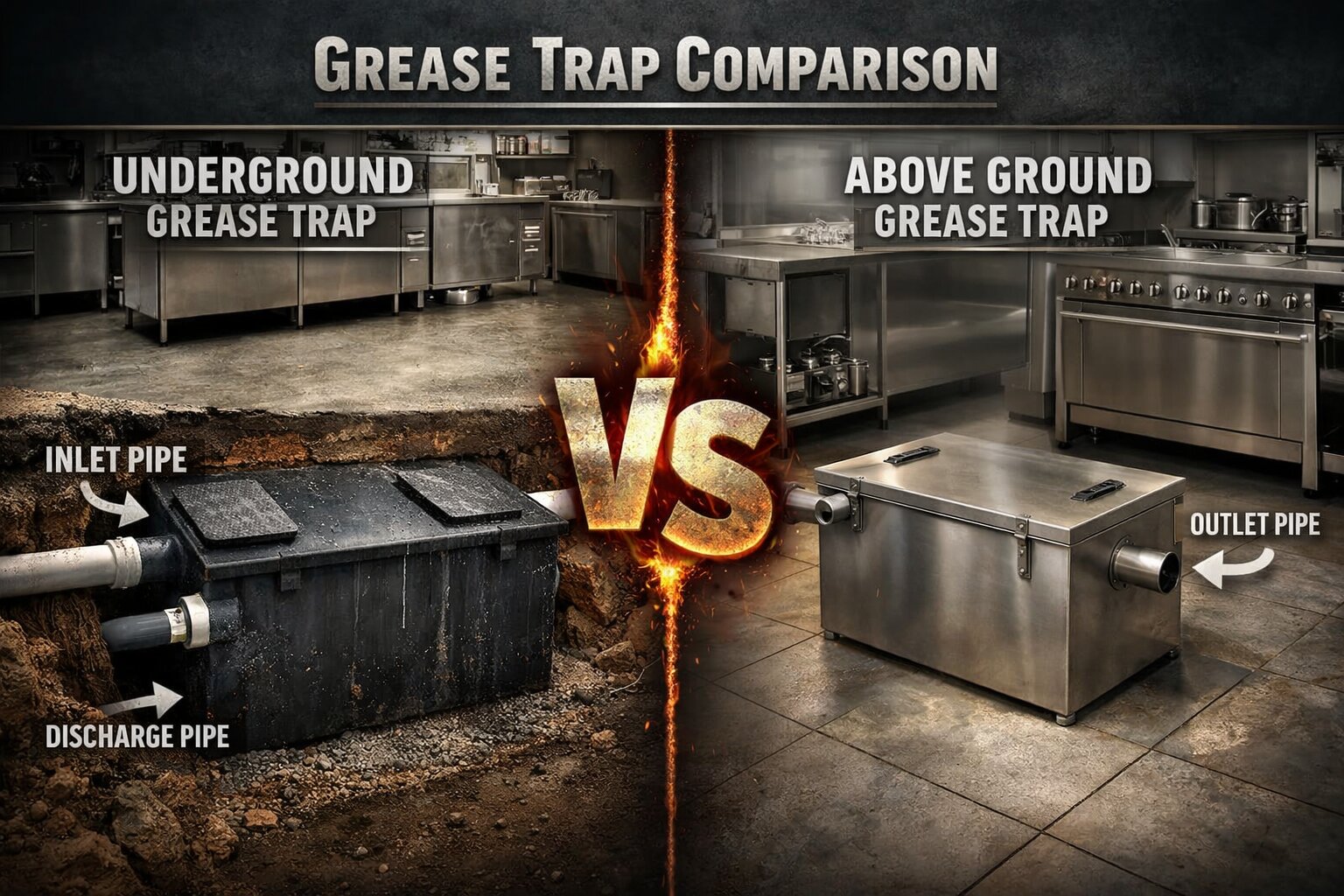
Underground Grease Trap
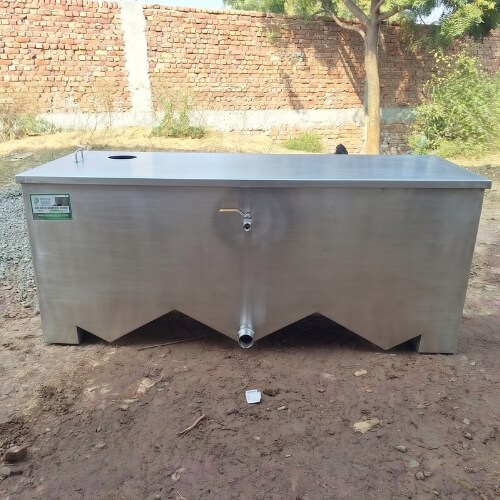
Underground Grease Trap Design in India for commercial kitchens is a large, high-capacity management system for Fats, Oils and Grease.
Meticulously designed for busy restaurants, hotels, industrial kitchens and food courts, this grease interceptor handles heavy flow volumes while staying out of the way and discreet.
The underground placement frees up valuable kitchen space, reduces odour issues and ensures smooth wastewater flow with less disruption to daily operations.
With accurate design, correct size and proper installation, an underground grease trap offers long-term durability, easier maintenance and full compliance with municipal and pollution control norms.
Above-Ground Grease Trap Design
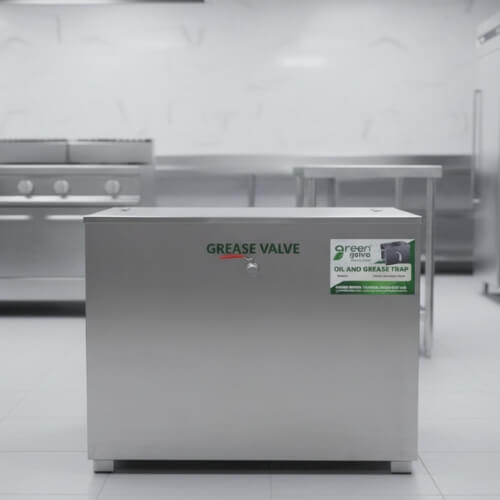
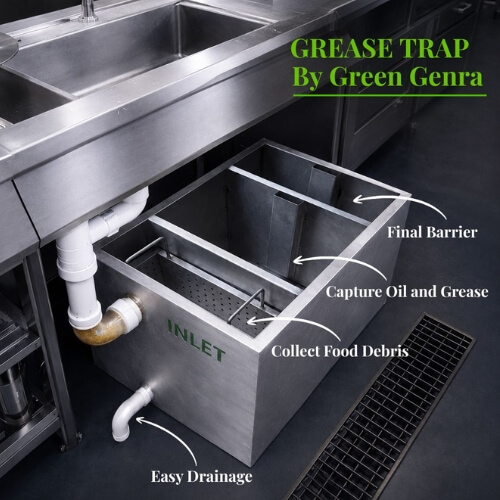
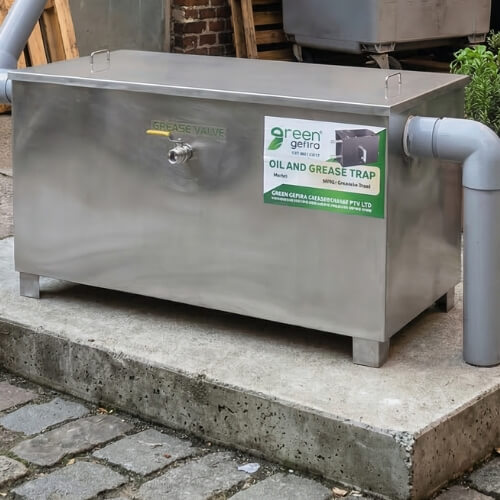
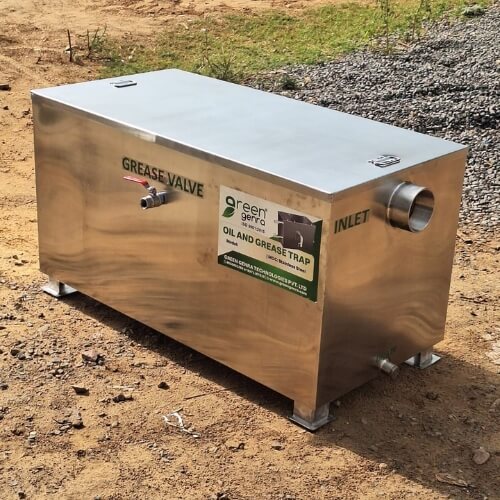
The above-ground grease trap design in India is a compact and easy-to-access FOG separation system. They are installed at floor level or under the sinks. These grease separators capture FOG and food particles before the wastewater enters the drainage line. These grease traps are ideal for small to medium-sized kitchens as they offer convenient cleaning, need no major civil work and allow the staff to monitor performance in real time.
With perfect design, accurate size, and multi-chamber flow, these grease traps are manufactured using premium quality materials to ensure smooth kitchen operations and reduce plumbing issues.
Poor Grease Trap Design can shut down your Commercial Kitchen
One of the most common reasons for operational disruptions in Indian commercial kitchens is poorly designed grease traps. If the grease separator fills up quickly or fails to separate grease efficiently, plumbing issues arise in a few days.
The commercial kitchen will face-
• Frequent choked pipelines
• Overflow of greasy water
• Strong odour in the kitchen and dining areas
• Increase pet risks
• Frequent need for manual cleaning
Factors that make Grease Trap Design Important in India
• Correct Sizing Prevents Frequent Blockages: The biggest mistake commercial kitchens make is installing an undersized grease trap. Whether you are seeking an automatic grease trap design in India or any other type, the proper size is important. A well-designed system considers the number of sinks, cooking type, daily wastewater volume and peak-hour load. Correct sizing prevents overflow, ensures free-flowing plumbing line and enhances separation.
• Effective Grease Separation: If the water flows too fast, grease does not have enough time to rise and separate. An accurate stainless steel grease trap design in India will have flow control devices, baffle walls and proper chamber layout. This ensures maximum FOG capture and minimum manual intervention.
• Easy to Maintain: Correct design of the grease trap ensures easy maintenance, thus reducing downtime. A smart grease trap design includes straightforward cleaning channels and sufficient grease storage capacity. Thus, cleaning is easy for the staff.
• Pollution Control Guidelines Compliance: Indian Commercial kitchens follow FOG management rules. A compliant grease trap prevents FOG discharge into public drains, attracting fines. A good grease trap design ensures your system meets every requirement without added modifications.
Investment in Correct Grease Trap Design- Saves Business Money
Investing in the right grease trap design brings long-term financial benefits for Indian commercial kitchen owners.
• Reduces plumbing repairs
• Fewer kitchen shutdowns
• Lower cleaning frequency
• Better wastewater flow and hygiene
• An odour-free environment increases customer experience.
A well-designed and eco-friendly grease trap design in India is an important investment in kitchen efficiency, hygiene and long-term sustainability.
With correct grease trap design, Indian commercial kitchens enjoy smooth operations, fewer breakdowns, and lower maintenance costs, a safer and more hygienic working environment.
FAQs
1. What is the IS code for grease trap design in India?
The IS Code for grease trap design in India is IS 6934, which provides proper guidelines for designing and constructing drainage systems, including the grease traps. Green Genra offers tailored grease traps with the correct design for commercial kitchens in India, following the IS code norms.
2. Why are grease traps important for commercial kitchens?
Grease traps are important for commercial kitchens because they stop fats, oils and grease from entering the drainage system, preventing blockages and ensuring smooth kitchen operations.
3. Why Green Genra is the leading exporter and supplier of grease traps for commercial Kitchens in India?
Green Genra is the leading exporter, manufacturer and supplier of grease traps for commercial kitchens in India because it provides the best quality, durable and compliant devices designed for the demanding needs of the Indian commercial kitchens.
Share with:
Latest News
-
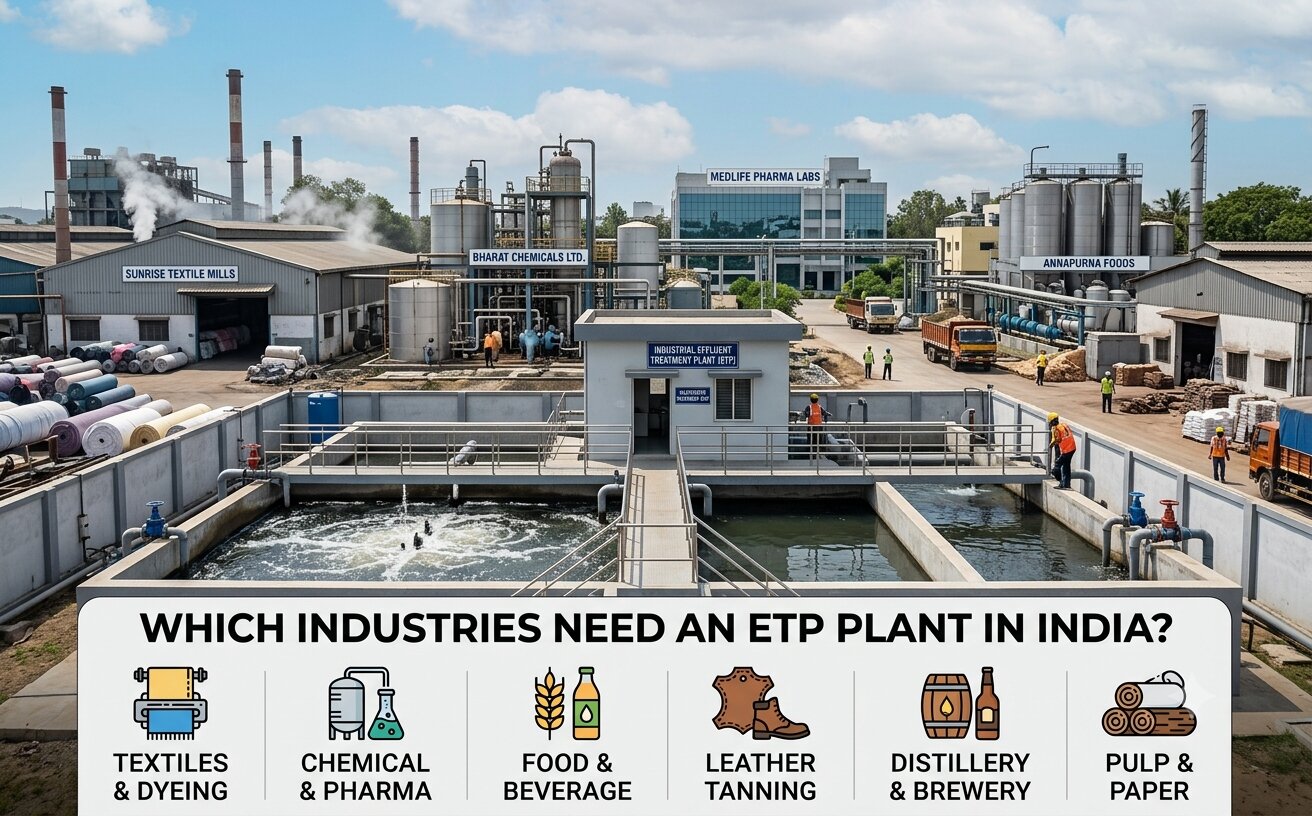
Which Industries need an ETP Plant in India?
17-09-2026
Our Clients
















































Latest News
Which Industries need an ETP Plant in India? 17-09-2026
Industrial growth in India has hit sky-high across many verticals, including manufacturing, textiles, pharmaceuticals, chemic...
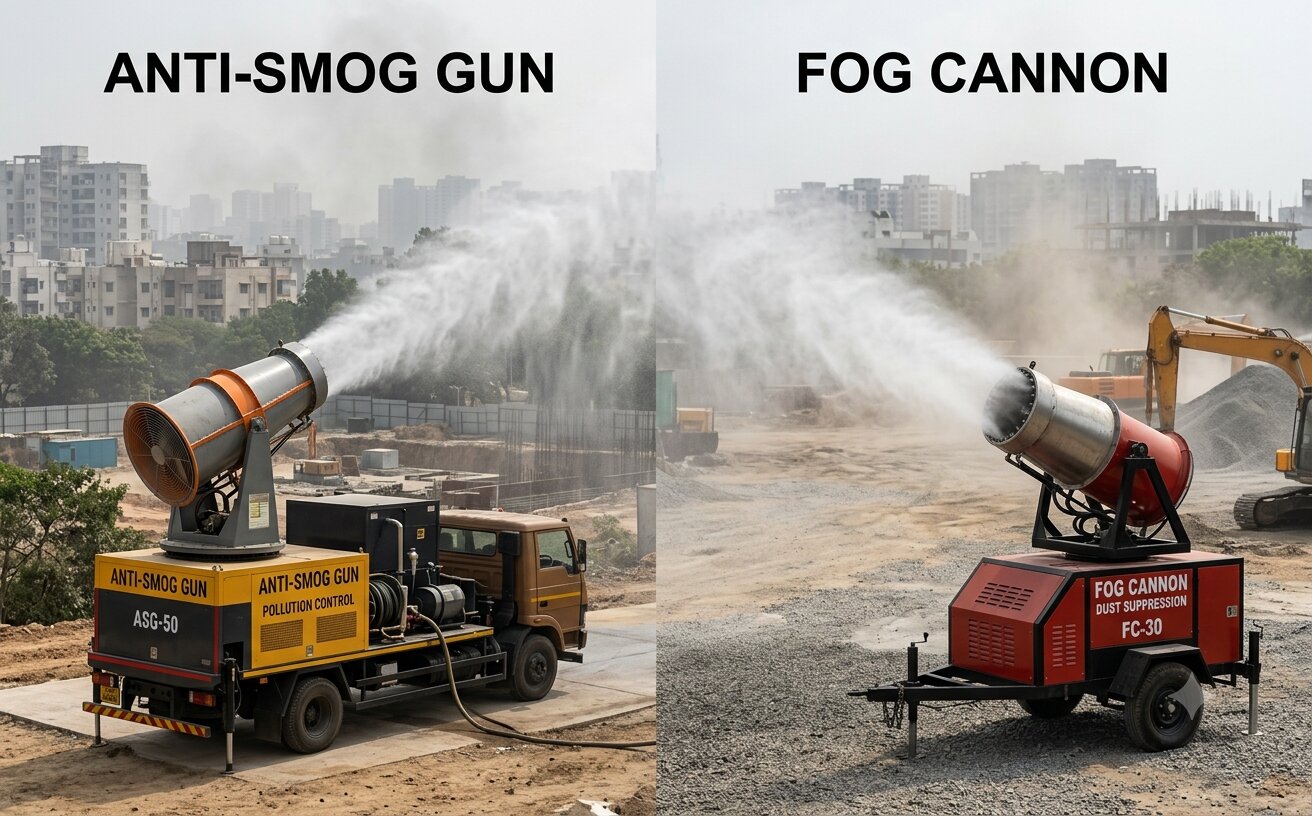
One of the most common issues Indian cities are facing is pollution. Pollution is very common in Delhi and the NCR area, wher...
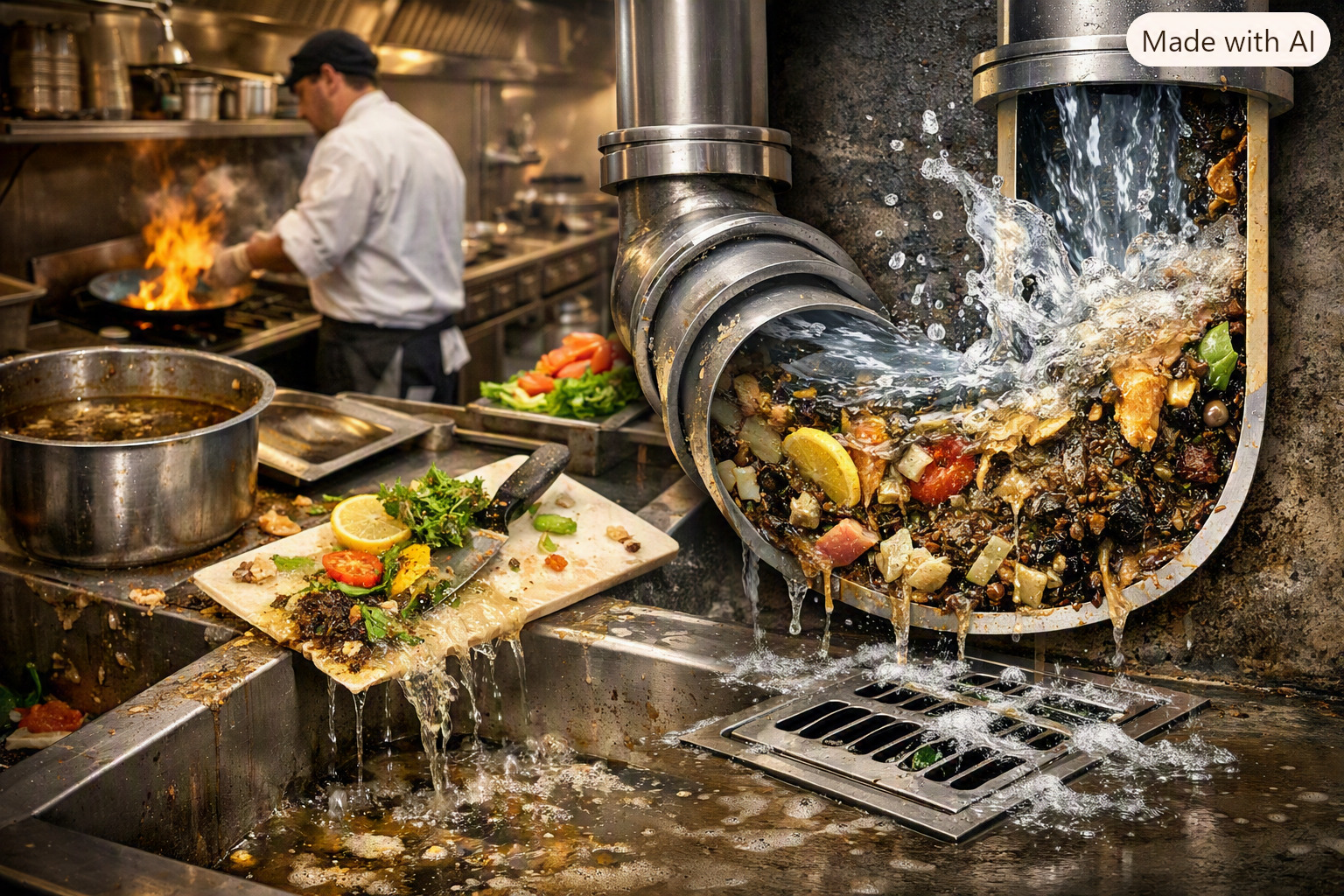
Commercial kitchens deal with large volumes of food, cooking oils, fats, food particles and wastewater daily. Hotels, food jo...
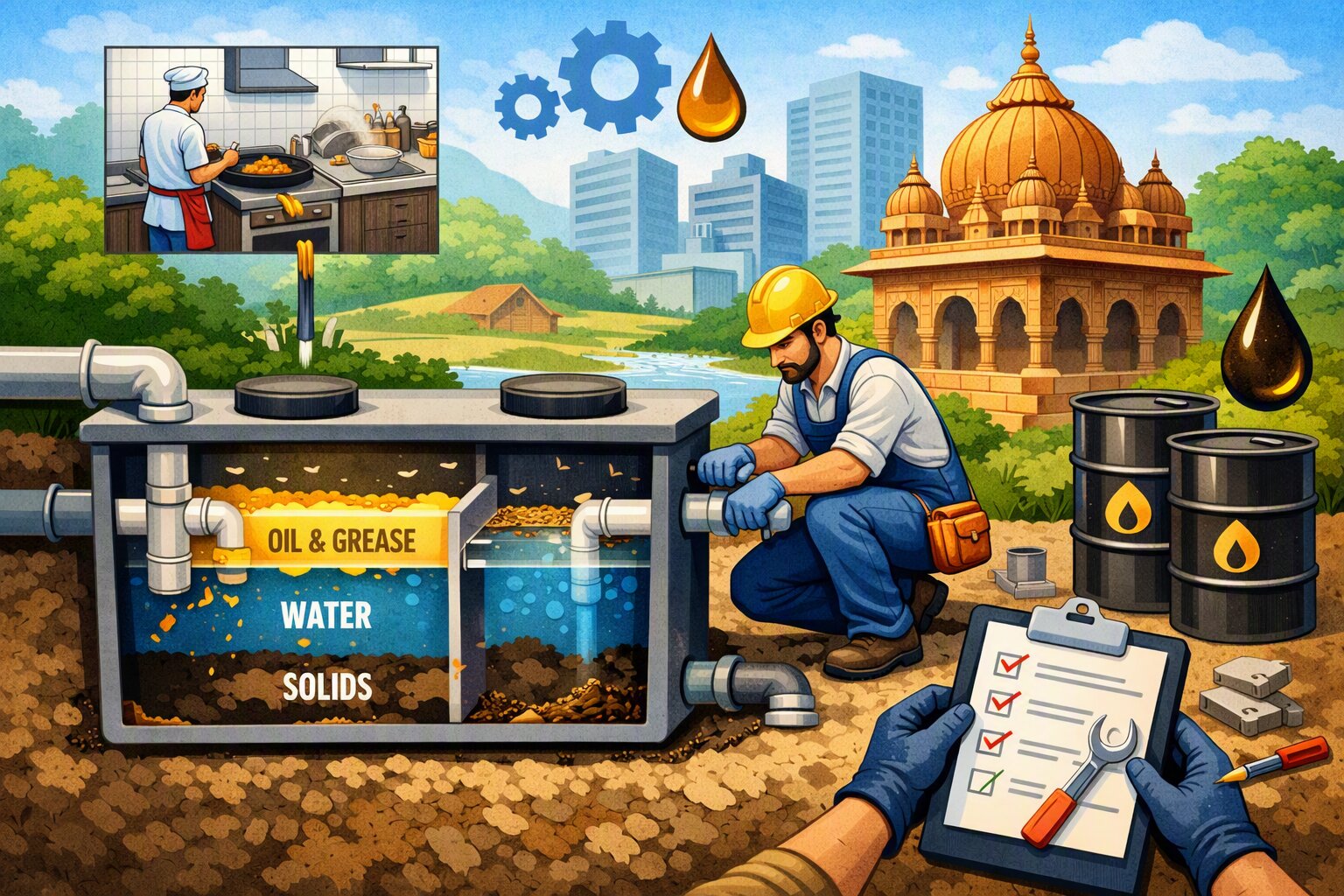
Complete Guide to Oil & Grease Traps in India: Types, Working, Installation & Maintenance 12-08-2026
Commercial kitchens, restaurants, healthcare facilities, canteens, food joints, and food processing units generate wastewater...
Underground v/s Above Ground Grease Trap 18-07-2026
Commercial kitchens in restaurants, hotels, food courts and other food facilities generate large quantities of FOG – fa...
Restaurant Grease Trap Buying Guide 02-07-2026
If you are an owner of a restaurant, you must consider investing in a good grease separator. The best Grease Trap for a resta...
Upcoming Events